
11 B2B Email Marketing Strategies
Are you looking for the best B2B email marketing practices to boost your digital marketing strategy? Are you wondering if email marketing is still effective in the B2B space in 2023?
Email marketing has established itself as the leading strategy for generating financial results for 93% of B2B marketing professionals. However, it's common for B2B sellers to focus too much on emotion-based B2C email marketing tactics.
It's important to remember that B2B sales are based on logic and reason, even when decisions are made by human beings. Finding the right balance is key.
B2B Email Marketing Strategies
B2B email marketing is a strategy for generating and retaining potential customers through email in the business environment. It involves sending the right emails to the right B2B clients at the right time. However, it's not as simple as just sending a generic marketing email. If it were, you wouldn't be looking for tips to improve your B2B email marketing. Here are eleven impressive B2B marketing strategies you can implement in your next digital campaign.
1. Set Your Marketing Goals
It's crucial to establish clear goals for your B2B email marketing strategy. Setting specific objectives is fundamental for long-term growth and success measurement.
The most common goals include lead generation, increasing brand awareness, and sales. It's important to avoid setting vague goals like "get more leads." Instead, it's recommended to set concrete, specific, and measurable goals.
2. Determine Your KPIs
KPIs (Key Performance Indicators) are specific, measurable metrics that are linked to previously established objectives. Choosing the right KPIs will provide you with information about user activity and help you evaluate the results of your efforts.
The 10 most important KPIs are the following:
- Open rate
- Bounce rate
- Click-through rate
- Conversion rate
- ROI
- Unsubscribe rate
- Opt-out rate
- Spam rate
- List growth rate
- Engagement over time
If it's your first time, you can use email marketing software to do all the heavy lifting.
3. Find Your Target Audience
In a B2B company, the target is not necessarily an individual B2B buyer. Instead, you're targeting a group of people who make purchasing decisions in the company. This group of people is known as the buying center.
And this power center includes six main roles:

To target each person effectively, you'll need to understand the pain points and pressures of their role in the company.
4. Create Buyer Personas
A buyer persona is a fictional representation of your ideal potential customer. Creating buyer personas involves understanding which companies can benefit most from your products or services. The goal is to put yourself in the buyer's shoes and understand their needs and challenges.
- Identify your customers
- Understand their wants and needs
- Determine how they want to interact (and buy)
The better you know your buyers, the more effective your email marketing will be.
And you'll see fewer unsubscribes or spam reports.
5. Use Email Segmentation
B2B email marketing is an effective strategy for generating and retaining potential customers in the business environment. However, it's not simply about sending generic emails, but about segmenting and personalizing messages according to each customer's role, behavior, and buying cycle stage. By implementing segmentation strategies, B2B email marketing campaigns have been shown to generate a significant increase in revenue. Leveraging this strategy is fundamental to maximizing engagement and achieving successful results in marketing campaigns.
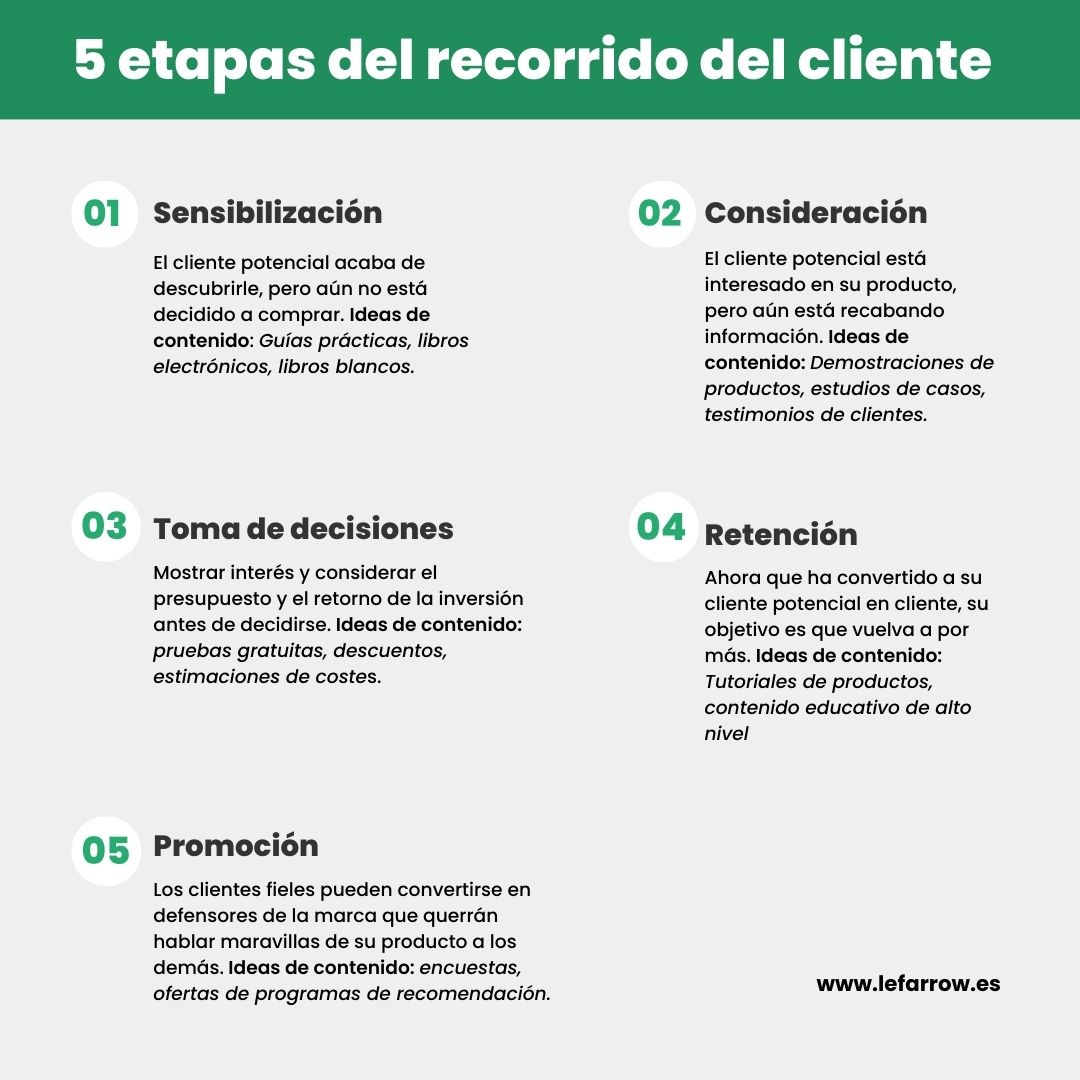
6. Base Your Campaign on Customer Journey Stages
To ensure the relevance and timeliness of your emails, it's important that your B2B email marketing cycle reflects the stages of the customer journey. This way, you'll be meeting your customers' needs at the right time.
The five main stages are:
7. Choose the Types of Emails You Want to Send
An effective B2B email marketing sequence usually contains more than 30 emails. Some of the different emails you should include in your marketing strategy are:
Prospecting
- Prospecting emails introduce people to the solution your company offers.
Best practices for prospecting emails:
- Strategically position your company as a go-to resource.
- Highlight the value potential customers will receive.
- Offer a compelling reason to get in touch.
- Build rapport to generate trust.
- Make it engaging.
- Lead nurturing
A nurturing email sequence helps potential customers move through the marketing funnel, encouraging them to convert.
Each email is triggered based on user behavior.
Here is a B2B email marketing example for cart abandonment:

Best practices for nurturing emails:
- Offer useful B2B marketing content with expert insights.
- Stick to one topic per email.
- Be concise.
- Make sure emails progress naturally.
- Track key metrics.
Drip Campaigns
Drip campaigns are a set of pre-written email messages sent to current and potential customers in a continuous and consistent flow.
These perfectly timed messages are an excellent way to maintain attention and follow-up with your customers.
Best practices for drip campaigns:
- Send story-driven emails to build trust and B2B brand awareness.
- Send fewer transaction-based messages to increase your trust signals.
- Share your expertise.
- Offer engaging, relevant, and high-quality content.
Promotional
- Promotional emails have the sole purpose of promoting a product or service.
Best practices for promotional emails:
- Quality over quantity.
- Clear and concise subject lines.
- Use attractive visuals.
- Include a call to action.
Newsletters
If you regularly offer your subscribers truly engaging content, they will reward you with loyalty and sales.
Best practices for newsletters:
- Include the 3 to 5 most recent blog posts, press releases, or videos.
- No sales pitches: save those for your promotional emails.
- Tell a story: describe how your product or service has helped other customers.
- Show readers how they can get the most out of your product or service.
- Present benefits through incredibly informative infographics.
8. Grow Your Email List
To succeed in B2B email marketing, it's crucial to build an organic email list, obtaining email addresses with user consent. Buying B2B email lists is out of the equation, as sending unsolicited emails can alienate potential customers and lead to legal penalties. It's important to take the time to obtain email addresses ethically, avoiding risks and protecting the company's reputation. An organic email list can be a powerful tool in your digital marketing strategy, generating more effective and lasting results.
9. Cheat (Ethically) with an Email Template
It's recommended to create a library of high-quality templates for each type of email you want to send. Although it may take some initial work, you'll find it rewarding when you need to send hundreds of emails a day and can finish quickly, freeing up time for other tasks.
10. Use Email Marketing Automation

Email marketing automation is an effective strategy for saving time and reducing costs in your B2B campaigns. You can use automation to perform tasks that would consume a lot of time if done manually.
For example, you can set up automations that automatically tag contacts based on their actions, such as subscribing to an email list. You can also use automation to track actions contacts don't take, such as not interacting with your emails.
Marketing automation is a powerful tool that allows you to optimize your efforts and maximize results.
11. Track Campaign Results
As a B2B email marketer, it's essential to use email marketing analytics to evaluate both successes and failures. These analytics will provide you with valuable information to optimize your future campaigns.
It's important to keep in mind that what works in the present may not have the same impact in the future. Therefore, it's recommended to set SMART goals (specific, measurable, achievable, relevant, and time-bound) and consistently track results over time.
By setting SMART goals and tracking results, you'll be able to eliminate guesswork and obtain tangible results that you can follow and analyze effectively. This will allow you to optimize your campaigns and continuously improve your email marketing strategies.


